
Open-Source AI Commercialization: An Anonymous Case Study
An anonymized case study of how an open-source AI startup moved from research visibility to repeatable enterprise revenue through a defensible offer, standardized sales, and disciplined GTM.
Open-source AI commercialization is the process of converting technical adoption into repeatable paid outcomes. In this anonymized case study, a research-led AI infrastructure startup moved from experimental services to repeatable enterprise revenue by separating GitHub-led community distribution from enterprise monetization.
The central question was simple: what would customers repeatedly pay for? The answer did not come from adding another subscription tier. It came from identifying a defensible paid outcome, reorganizing the offer around it, and treating every other initiative as either a distribution engine or a distraction.
Anonymization note: names, products, customers, partners, event references, contracts, timeline, revenue, growth metrics, and implementation thresholds have been removed or generalized. The operating lessons are real; this article is not intended to identify the client.

TL;DR: What this open-source commercialization case shows
- Open-source adoption and monetization are related, but they are not the same system.
- Start with the enterprise outcome your technology can produce unusually well—not the easiest feature to put behind a paywall.
- Standardize the offer only after buyers repeat the same outcome, scope, and acceptance logic.
- Keep GitHub and community work as measurable trust channels, with explicit limits during the commercialization phase.
- Treat every conclusion as a hypothesis for your own market; this anonymized case deliberately excludes client metrics and identifiers.
What changed in this open-source AI commercialization case?
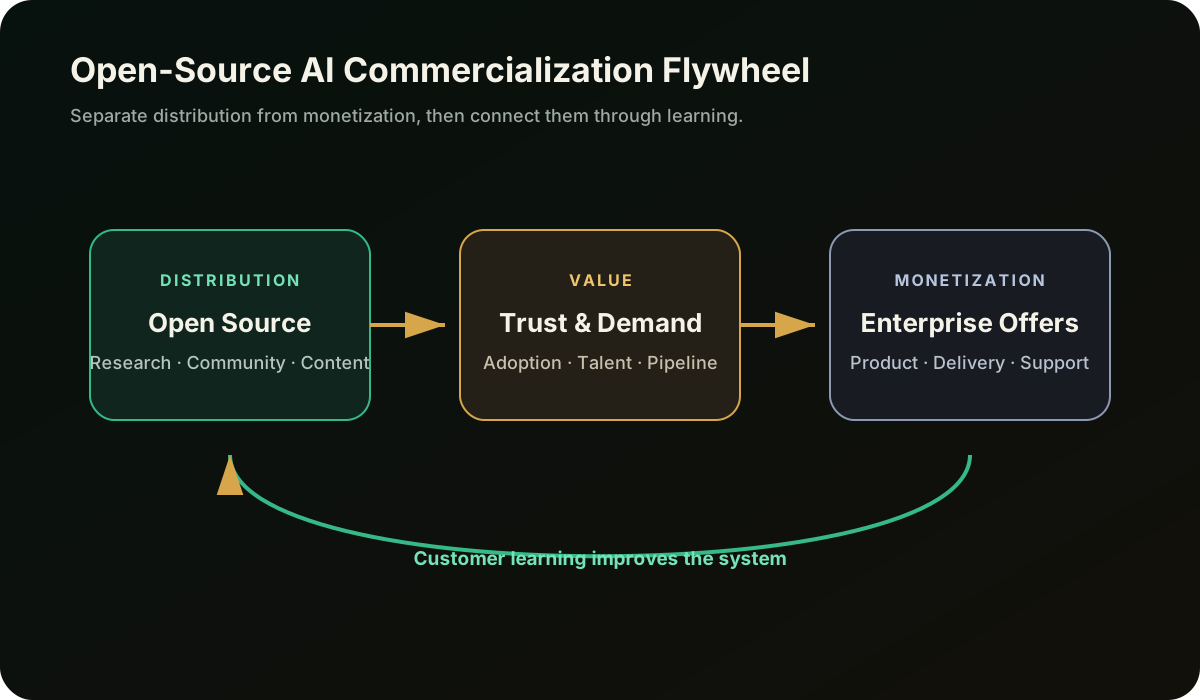
The commercialization shift means the company stopped asking how to charge for its repository and started asking which enterprise outcome its technology could produce unusually well. Our advisory record covered recurring decisions across product, sales, community, and fundraising. During that period, the startup moved from research visibility and project-based consulting toward a portfolio led by a defensible enterprise outcome, supported by standardized software, implementation, support, and training. The important pattern is structural: GitHub remained the trust and talent engine, while HubSpot-style pipeline discipline governed paid work. Open source was no longer forced to be the product customers bought. A narrower paid outcome created a clearer buyer, procurement path, delivery team, and learning loop. This account deliberately excludes the client’s revenue, growth rate, customer count, contract value, timeline, and identifying product details.
| Anonymized signal | Before | After |
|---|---|---|
| Commercial model | consulting experiments | defensible outcome + standardized offers |
| Revenue quality | experimental | repeatable enterprise revenue |
| Open-source adoption | early traction | established distribution channel |
| Enterprise sales | founder-led custom work | packaged scope + channels |
| Operating priority | many parallel bets | a small set of validated lines |
Why was the original open-source business model weak?
The original business model was a common open-source trap: treating repository adoption as proof that a hosted SaaS version would sell. Our case-study analysis found three mismatches. First, developers who loved the GitHub framework were not always budget owners. Second, a generic hosted layer entered a crowded category with limited differentiation. Third, custom enterprise work generated cash but consumed founder and research time, making each new contract harder to repeat. Competitive research using GitHub, Product Hunt, and public pricing-page signals showed that better-funded alternatives were already competing on hosting, integrations, and developer experience. The startup’s distinctive advantage sat elsewhere: its system could produce and evaluate a difficult enterprise outcome at a quality and speed buyers valued. Reframing the market around that outcome changed the competitive set. Instead of selling “our framework, but managed,” the team could sell a measurable improvement tied to customer performance.
How did a defensible enterprise outcome become the revenue engine?
A defensible enterprise outcome is a result the startup can produce unusually well because its technology and accumulated learning work together. The analysis mapped a broad path from research capability to a repeatable paid outcome. The key was not selling undifferentiated files or hours, but packaging an accountable result that improved the underlying system after each delivery. The exact deliverable, buyer, evaluation method, operating workflow, commercial contribution, and team structure are intentionally withheld.
How were B2B sales and pricing made repeatable?
Standardized B2B sales means converting recurring customer outcomes into named packages with clear boundaries and support levels. The team separated the reusable offer from optional implementation and enablement, making custom work visible instead of hiding it inside one opaque price. The repeatability test was simple: could another buyer purchase substantially the same outcome without rebuilding the offer? Once the pattern repeated, delivery moved from founder memory into documented routines. Exact packages, systems, prices, margins, service levels, sales cycles, and commercial terms are withheld.
What role did community and timely distribution play?
Community-led distribution means using open-source adoption, contributor reputation, and timely technical content to create demand without making community activity the commercial product. We tracked a portfolio of growth loops: founder conversations, a small ambassador group, user cases, developer-community distribution, search content, and launch moments tied to broader market attention. One fast-response campaign produced material attention and repository growth; the campaign, event, timing, platforms, and metrics are withheld to protect anonymity. The lesson was not “copy a viral post.” It was to build a fast response system: detect the trend, ship a credible technical demonstration, express the difference clearly, activate trusted community members, and route attention to a useful repository experience. Community work stayed funded because it supported trust, hiring, and pipeline—but routine visibility tasks were not allowed to displace enterprise delivery or the core commercial engine.
How did the team decide what not to build?
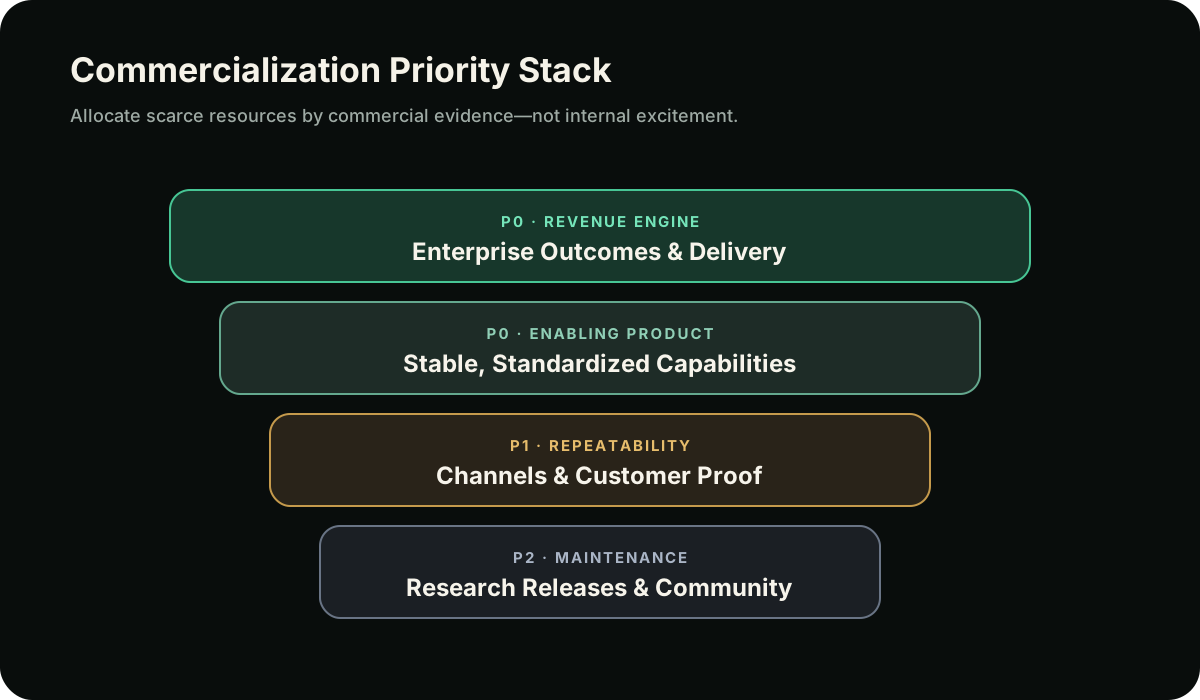
Revenue-priority planning is a portfolio method that ranks initiatives by commercial evidence rather than internal enthusiasm. We placed every product line into a simple operating stack: P0 for enterprise delivery and the core enterprise outcome; P0 for the stable standardized product needed to support those customers; and P2 for research releases and community maintenance that preserved long-term influence. This did not mean abandoning open source. It meant matching investment to the company’s current constraint. The team reviewed five signals for each initiative: buyer urgency, time to revenue, repeatability, defensibility, and founder dependency. Any project that could not improve one of those signals in the next quarter lost headcount or became maintenance-only. A revenue goal was then decomposed into deal count multiplied by contract value, with a separate scenario for prosumer subscriptions. That arithmetic made tradeoffs legible to the team and made the growth story more credible to investors.
What can another AI startup copy from this case?
The reusable playbook is a commercialization sequence for technical startups with strong adoption but weak monetization. First, inventory the outcomes your technology uniquely produces. Second, interview economic buyers and map their procurement path. Third, choose one revenue engine and one supporting product line for a time-boxed test. Fourth, standardize repeated deals into scope, implementation, training, and support. Fifth, keep GitHub and Discord as measurable distribution layers rather than unlimited activity. Sixth, review the portfolio regularly against revenue, learning, and founder dependency. In our advisory record, the largest gains came from removing ambiguous work, not adding more campaigns. A healthy operating cycle puts most scarce product capacity behind a very small number of validated priorities. The transition is rarely a clever Product Hunt launch; it is a chain of decisions that aligns product, sales, delivery, community, and financing around the same commercial truth.
What are the limits of this anonymous case study?
The evidence boundary means separating documented operating decisions from reconstructed attribution and confidential outcomes. Working notes support the strategy, packaging, prioritization, community, and sales recommendations described here. This article does not publish private financial statements, customer contracts, customer identities, product names, or a causal model claiming that advisory work alone created the result. Startup outcomes are collective: founders, researchers, operators, market timing, customer demand, and capital all mattered. Revenue, growth, customer count, financing, team, and timing details were excluded because they are confidential or could enable reverse identification. This is why the case is framed as “advised through” a transition, not “single-handedly created” one. Use the framework as a set of hypotheses to test against your own buyers—not as a promise that copying a list of tactics will reproduce a particular outcome.
An open-source commercialization diagnostic
A commercialization diagnostic is a short evidence-gathering process for deciding whether an open-source startup has a repeatable paid wedge. Interview users, budget owners, and prospects who chose another solution. Map alternatives by buyer, outcome, pricing model, and distribution channel—not feature count. Compare a small set of offer shapes, test a paid outcome, and look for evidence that another buyer would purchase substantially the same scope. Track qualified conversations, paid tests, delivery effort, margin direction, and repeated scope. If every engagement requires a new product, buyer, and process, the model remains consulting. If the same outcome repeats, it may support a scalable business.
Related reading
- Go-to-Market Strategy: The Complete 2026 Playbook
- Open Source Marketing: The Complete Guide
- B2B SaaS Growth: 7 ICP Fixes for 2026
- Product Market Fit: 25 Signs + Checklist
Frequently asked questions about open-source commercialization
How do open-source AI startups make money?
The strongest model separates distribution from monetization: open source earns trust and adoption, while enterprise products, deployment, support, training, or workflow outcomes capture value from buyers with urgent operational needs.
Should an open-source startup sell SaaS first?
Not automatically. SaaS is attractive when the team has a repeated workflow, a clear buyer, and low delivery variance. If another enterprise outcome is more defensible, validate that revenue line before defaulting to hosted SaaS.
How should an AI startup prioritize product lines?
Rank each line by buyer urgency, sales-cycle length, delivery repeatability, gross-margin potential, and strategic defensibility. Fund the one or two lines that produce both learning and revenue; maintain the rest lightly.
When should a startup standardize enterprise services?
Standardize once three or more customers repeatedly buy the same outcome. Package the common scope, implementation, support, and training separately so sales becomes easier to price, deliver, and delegate.
What has been anonymized in this case study?
Company, product, founder, customer, partner, event, contract, timeline, revenue, public-growth, and implementation details were removed or generalized to prevent reverse identification.
Last updated: 2026-08-04 · This case has been anonymized and aggregated to protect the client.